.png)
Beginner Horse Riding Tips for Building Confidence, Safety, and Skill

The first few rides can feel like a lot at once. There is a large animal beneath you, new words to learn, gear to adjust, and a coach reminding you to breathe, steer, sit tall, and relax at the same time.
That is normal.
Good riding starts long before you canter a circle or jump a fence. It begins with calm handling, clear body language, safe habits, and small wins in the saddle. These beginner horse riding tips will help you feel more prepared, whether you are getting ready for your first lesson or returning after time away.

Start by building trust on the ground
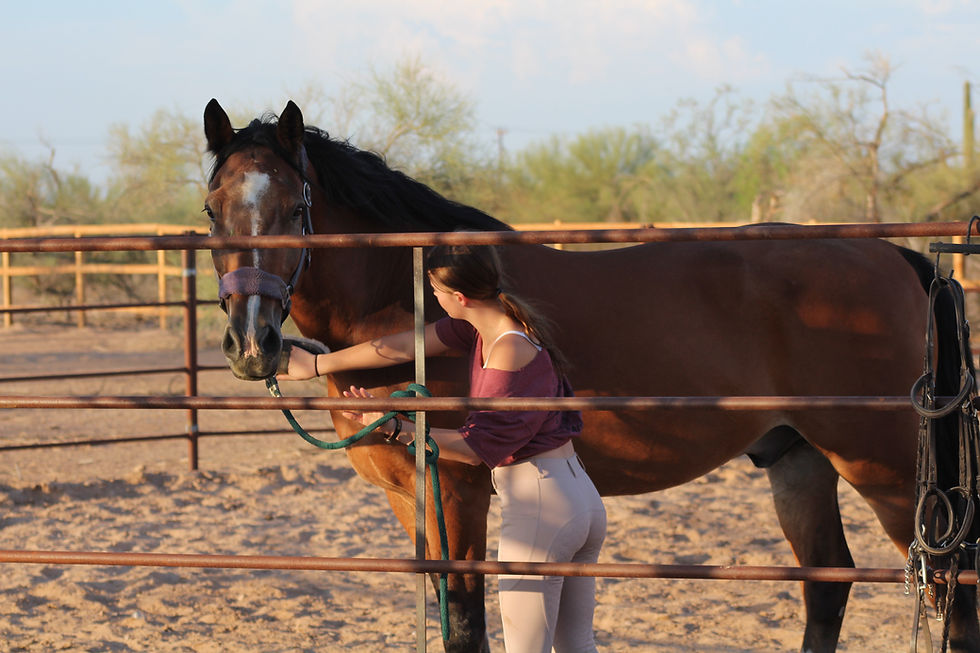
A strong bond with a horse does not come from rushing into the saddle. It comes from consistent, quiet moments where the horse learns that you are calm, fair, and predictable.
Start with simple ground skills:
Approach from the side
Horses have blind spots directly in front of their face and behind their tail. Walk toward the shoulder, speak softly, and let the horse notice you.
Move slowly and with purpose
Fast arm movements, loud voices, and sudden steps can make a horse anxious. Calm does not mean timid. It means clear.
Groom before you ride
Grooming helps you check for dirt, soreness, cuts, loose shoes, or swelling. It also gives the horse time to settle before work.
Learn to lead well
Walk beside the horse’s shoulder, not far ahead and not behind. Keep a safe distance from the feet. Do not wrap the lead rope around your hand.
Horses respond well to routine. A simple pattern, halter, groom, tack up, walk to the arena, helps a beginner feel prepared and helps the horse understand what comes next.
The best beginner riders are not the bravest. They are the ones who stay aware, ask questions, and keep learning.
Learn what your horse is saying
Horses speak through their bodies. A beginner who learns to read ears, eyes, posture, and tail movement gains confidence faster because the horse feels less mysterious.
Watch the ears
Ears forward often mean the horse is interested in something ahead. One ear back and one forward can mean the horse is listening to the rider while watching the environment. Pinned ears, flat against the neck, can signal irritation, discomfort, or a warning.
Do not panic over one sign alone. Read the whole horse.
Notice the eyes and face
A soft eye usually looks relaxed. A tense horse may show tight nostrils, a raised head, or a stiff jaw. If a horse looks worried, pause and give it room. Tell your instructor rather than trying to “fix” the situation alone.
Pay attention to the tail
A gently swinging tail is normal. A sharply swishing tail can mean irritation, flies, discomfort, or frustration. During lessons, a swishing tail may appear when a horse is confused by mixed cues or bothered by a rider’s balance.
Feel the body under you
Once mounted, the horse’s body gives feedback. A relaxed horse usually has a steady rhythm. A tense horse may speed up, hollow its back, brace through the neck, or drift away from the rider’s leg.
Your job is not to control every movement with force. Your job is to give clear signals, stay balanced, and listen.

Wear the right gear every time
Safe riding gear is not about looking the part. It protects you, helps your position, and makes lessons more comfortable.
Choose a certified riding helmet
A properly fitted riding helmet is essential. Bike helmets are not designed for horseback riding falls. Use an equestrian helmet that meets current safety standards and replace it after a hard impact.
A good helmet should:
Sit level on your head
Feel snug without causing pain
Stay in place when you shake your head
Have a secure chin strap
Many lesson barns can provide a helmet for first rides, but owning one is a smart step if you plan to continue.
Wear boots with a heel
Riding boots or paddock boots help prevent your foot from sliding through the stirrup. Avoid sneakers, sandals, hiking boots with heavy tread, or any shoe without a defined heel.
Pick comfortable pants
Breeches, riding tights, or fitted pants work best. Loose fabric can bunch or rub. Jeans can work for some western lessons, but seams may become uncomfortable in an English saddle.
Use gloves if your hands slip
Gloves help with grip and protect your fingers from rubbing reins. They are especially useful in cold weather or when learning to post the trot.
If you are trying lessons for the first time, ask the barn what gear they require. Each program may have its own rules.
Make safety a habit, not a reaction
Riding has risk, even with a steady lesson horse and a good instructor. Safe habits reduce that risk and make the whole experience calmer.
Before every ride:
Check that the girth or cinch is snug
Make sure the bridle is fitted correctly
Adjust stirrups before mounting
Keep reins organized, not tangled
Look around the arena before moving off
During the ride:
Keep at least one horse length between horses
Pass left shoulder to left shoulder unless instructed otherwise
Listen to your instructor before changing direction or speed
Avoid yelling or sudden movements
Tell your instructor if you feel unsafe, dizzy, or overwhelmed
Around horses, awareness matters. Never duck under a horse’s neck while tied. Never walk close behind a horse unless you keep a hand on its body and stay very close, or better, walk well around the hind end. Do not kneel near a horse’s feet.
Safety is not a sign of fear. It is part of good horsemanship.

Master the basic riding position first
A balanced position helps the horse move comfortably and helps the rider feel secure. Beginners often want to focus on steering and speed, but position comes first.
Sit tall without getting stiff
Imagine a straight line from your ear to your shoulder, hip, and heel. Keep your chest open and your eyes up. Looking down at the horse’s neck pulls your weight forward and makes balance harder.
Relax your shoulders. A tall rider can still be soft.
Keep your heels gently down
Your heel acts like an anchor. Do not force it down so hard that your leg becomes tense. Let your weight sink through your calf and heel.
Think of a long leg, not a jammed heel.
Hold the reins with steady hands
Hands should stay quiet and slightly above the horse’s neck, depending on the discipline and your instructor’s preference. Avoid pulling back for balance. If you feel unstable, grab mane or a neck strap with permission instead of balancing on the reins.
The reins connect to the horse’s mouth. Soft hands matter.
Use your legs clearly
Your leg asks the horse to move forward, bend, or stay on track. Beginners often kick too much or grip constantly. A horse can become dull to the leg if every step feels like noise.
Ask lightly first. If the horse does not respond, your instructor may teach you how to follow up with a firmer cue. Then soften again.
Breathe and let your hips move
The walk has motion. The trot has bounce. The canter has a rolling rhythm. If you hold your breath, your body stiffens. A stiff rider feels harder for the horse to carry.
Try breathing out during transitions. It helps your body settle.
Build skills one ride at a time
Riding is layered. Each skill supports the next.
Learn the walk well
The walk teaches steering, balance, halt transitions, and awareness. Practice riding straight lines, large circles, and changes of direction. Work on stopping without pulling hard.
A clean halt uses your seat, core, and reins together. Your instructor may explain it as sitting deeper, closing your fingers, and softening once the horse stops.
Practice posting the trot
Posting rises and sits with the horse’s trot rhythm. At first, it may feel awkward. That is common.
A helpful pattern is “up, down, up, down,” while letting the horse’s movement lift you. Do not launch yourself out of the saddle. Keep your hands steady and your eyes up.
Learn two-point position
Two-point is often used in hunter/jumper riding and for balancing over the horse’s center of gravity. It means lifting your seat slightly out of the saddle while keeping your weight in your heels.
This position builds leg strength and balance. Start at the halt or walk before trying it at the trot.
Add canter when the basics are steady
The canter is smoother than the trot for many riders, but it requires confidence and control. Before cantering, you should be able to steer, halt, post the trot, and stay balanced through transitions.
No one needs to rush. Good barns introduce speed only when the rider and horse are ready.
For a quick visual preview, watch the video below. Videos cannot replace coaching, but they can help you recognize positions, terms, and lesson flow before signing up.
Avoid common beginner mistakes
Every rider makes mistakes. The goal is to notice them early and correct them with patience.
Common mistake | Why it causes trouble | Better habit |
Looking down | Shifts balance forward | Look where you want to go |
Pulling on the reins for balance | Makes the horse brace or slow suddenly | Use your core, leg, mane, or neck strap |
Holding your breath | Creates tension | Exhale during transitions |
Gripping with the knees | Pushes the lower leg back and tips the rider forward | Let weight drop into the heels |
Kicking every stride | Teaches the horse to ignore the leg | Ask, get a response, then soften |
Rushing to canter or jump | Skips needed balance and control | Build walk and trot skills first |
Ignoring discomfort | Small problems can grow | Speak up right away |
One of the biggest beginner mistakes is trying to “win” with the horse. Horses are strong, sensitive animals. Force usually creates resistance. Clear cues, timing, and reward work better.
Reward can be simple. Soften the rein. Stop squeezing. Pat the neck. Let the horse know when it answered correctly.

Choose lessons that match your goals
A good lesson program should feel safe, organized, and respectful of both horses and riders. Whether the goal is relaxed trail riding, basic English or western skills, or a path toward hunter/jumper competition, the foundation should look similar.
Look for:
Clean, well-fitting tack
Horses that appear cared for and suitable for lessons
An instructor who explains clearly
Safety rules that are enforced
A pace that matches the rider’s ability
Horses getting breaks, turnout, and fair treatment
If you are interested in hunter/jumper riding, ask how the program develops riders before jumping. A solid path usually includes flatwork, two-point, poles, small grids, and control between fences. Jumping should never feel like being pointed at a fence and hoping for the best.
For children, adults, and returning riders, private or semi-private lessons can help build skills faster at the start. Group lessons can be useful later, once steering and spacing feel natural.
Confidence comes from preparation and patience
Confidence in riding does not mean you never feel nervous. It means you know what to do with those nerves. You slow down, ask questions, check your position, and listen to your horse.
Start with the basics. Groom carefully. Learn body language. Wear proper gear. Build a safe position. Practice simple skills until they feel familiar. Celebrate quiet progress, like a better halt, a smoother posting trot, or a calmer walk past something spooky.
Every experienced rider was once a beginner trying to find the rhythm. Keep showing up with patience, respect, and curiosity. The skill will come, one ride at a time.
Baca Springs Ranch offers lessons for first-time riders, beginners and experienced hunter/jumpers.


Comments